
CIM State of the Union 2024
The first State of the Union of the media and advertising sector, organised by the CIM together with the Advertising Council, took place on 12 September 2024 at Mix in Watermael-Boitsfort.
In the presence of the owners and CEOs of media companies, advertisers and advertising and media agencies, the CIM and the Council provided an exclusive insight into the strategic challenges facing the sector.

Download below the memorandum of the 2024 edition of the State of the Union.
Curious about the atmosphere? Watch our aftermovie of this first State of the Union here.
Read also the article in MediaSpecs about this event.
From media-centric to consumer-centric
During the CIM State of the Union 2024, in mid-September 2024, the CIM presented an ambitious vision for measuring audience reach, abandoning the traditional, medium-specific model.
Stefan Lameire, Chairman of the CIM, emphasised that “the current challenges facing the media, both in terms of advertising and content, require local players to be able to adapt quickly and proactively in order to remain competitive in a globalised market. Our sector is still hindered by a traditional, media-centric measurement system. This outdated model poses a major challenge for brands, as it makes it difficult for them to accurately measure the effectiveness of their advertising spending across different channels.”
For the CIM, it is therefore essential to move from a media-focused approach to a consumer-centric approach, so that media and advertisers obtain accurate information on how they can reach their audiences across different platforms.
Koenraad Deridder
General Manager CIM

CIM ONE: towards a new era in media reach measurement
“Our goal is to create a measurement system that aligns with the reality of the modern consumer,” said Koenraad Deridder, General Manager of the CIM. With this approach, the CIM is focusing on cross-media integration, allowing the consumer ‘journey’ across different platforms to be better tracked.
Concretely, the CIM is working on CIM ONE, a comprehensive cross-media measurement system, within an innovative research framework that will be introduced in 2026 in order to provide a complete picture of media consumption. To achieve this, the CIM will set up a new panel that will also measure out-of-home media behaviour and integrate all digital media, such as social networks and streaming platforms.
A better answer to the needs of the advertising market
The CIM aims to increase its value for the advertising market. Currently, CIM figures are used to distribute around 1.4 billion euros in advertising revenue. However, for almost all digital transactions, billing is based on data from the media and platforms themselves.
The CIM has the ambition to play a larger role in the digital market. This is twofold:
- By helping define standards and by auditing and certifying digital systems and data, ensuring greater transparency and less fraud.
- By participating in the World Federation of Advertisers (WFA) Halo project, to arrive at campaign balances that include both offline and online media, including certified data from international platforms. A first step towards this is the further development of the Total Video Advertising (ToVA) tool.
More transparency and less fraud in the digital market
In 2024, 3% of digital transactions were identified as fraudulent and 21% of ads appeared on low-quality information websites, often focused on clickbait. The aim of the CIM’s new approach is clear: “Enable planning and negotiation based on individuals, because bots are not individuals,” added Koenraad Deridder.
Currently, digital advertising is mainly sold based on data from ad servers, but an analysis in Finland shows that targeting is inaccurate in one out of four cases. At present, ad servers underestimate viewers in connected TV by between 35% and 60%, because they do not account for the actual number of people in front of the screen, which hinders the sale of these uncounted contacts. “Counting is not the same as measuring,” Koenraad Deridder emphasized.
Stephan Loerke
CEO WFA

The WFA Halo project and the further development of ToVA
Stephan Loerke, CEO of the WFA, emphasised that his organisation’s Halo project was set up to develop a cross-media measurement framework at an international level. “This marks a turning point in measurement,” said Loerke, stressing the need for global standards and software to enable integrated measurement. Loerke also highlighted the importance of close cooperation with major platforms to ensure that data are accessible and that brands can effectively evaluate their campaign results. “Without an integrated approach, we leave gaps in our understanding of the effectiveness of advertising campaigns,” he added.
“If we can successfully integrate these data and convince advertisers of their value, we expect a significant impact on the entire market,” Loerke concluded. This approach is intended to ensure a fair distribution of advertising budgets, to the benefit of Belgian media.
In this context, Stefan Lameire emphasised that CIM ONE is designed to integrate data from Google, Meta and other major players. “The CIM is committed to auditing and certifying digital systems and data, so that advertisers can trust that their campaigns actually reach their target audiences; but the cooperation of major platforms is crucial to ensure full transparency and fairness among market players.”
The first step towards an integrated solution for offline and online media is to expand the functionalities of the successful CIM Total Video Advertising (TOVA) tool. Thanks to this instrument, agencies and advertisers gain the necessary insights to allocate their budgets more effectively between linear television and online video. At the State of the Union, it was announced that the planner functionality will be supplemented with a Post Buy solution, whereby the measured campaign results will in turn improve the forecasts in the planner.
An expanded mission for the CIM
Koenraad Deridder emphasised that the CIM has always upheld “credibility in the media” as a core value and intends to continue to maintain this reputation. However, new communicative values have since been added, such as inclusivity, co-creativity and continuous interaction with other players in the sector. “We are now taking an active role in these aspects,” he added, stressing the importance of these values in the CIM’s current mission.
The CIM is exploring the possibility of playing a role within the framework of the European Media Freedom Act, which prioritises the development of codes of conduct regarding reach measurement.
To this end, the CIM also became a member of the European Audience Measurement Coalition (AMC), which represents the Joint Industry Committees (JICs) and research institutes with European bodies such as the new European regulator, the European Board for Media Services (EBMS).
Financial outlook and expected results
According to CIM estimates, the financial impact of these initiatives looks very promising, with a potential contribution of an average of 140 million euros in advertising revenue, provided that all measures are effectively implemented. The introduction of integrated measurement is essential to strengthen advertisers’ trust, which could result in an increase in advertising spending. “Brands are more inclined to invest when they have access to continuous, reliable and transparent data,” Deridder emphasised.
“We expect CIM ONE to generate more than 140 million euros in additional advertising revenue for sales houses, with opportunities for radio, television and news media alike,” says Deridder. For television, surveys show that people spend five hours per day on TV and video combined, while the CIM measures only three hours in viewing figures. There is therefore a missing 40 percent, especially when it comes to watching video on smartphones, on the go, and streaming. That missing share represents a potential for monetisation, also by local sales houses.
In the Netherlands, the advertising market for radio grew by eight percent after the switch to a new measurement method identical to the one the CIM will also use. “We can expect a comparable positive effect for the Belgian radio market. For news media, we believe that CIM ONE will support sales houses in selling more display advertising and outstream video, enabling them to compete more strongly with social media,” Deridder concludes.
The intention is that there will also be a direct return for advertisers through a higher return on investment. In that context, Stephan Loerke emphasised that “we must be able to demonstrate the value of every euro spent on advertising, because this is essential to convince advertisers to allocate their budgets.”
Collaboration as the superpower of our ecosystem
Collaboration between sector partners and regulatory authorities is also crucial, as it can provide greater legal certainty and more trust in local media.
Government support for innovation can play a role in realising all these ambitions. The XMM project, supported by the Flemish Government, has enabled media players in the north of the country to take an important step forward in cross-media measurement. French-speaking media groups, together with the CIM, have developed a similar project for the French-speaking market, which may receive support from the Walloon government and the community.
State of the Union - Whitebook
All insights from the first “State of the Union” conference were bundled into a whitebook that you can download here.
The first edition of the State of the Union was organised in 2024 by the CIM and the Advertising Council, together with their event partners: GfK/NIQ, Puilaetco, Deloitte and PUB.
Recent news

Media measurement 2.0: 11 takeaways about what technology makes possible today
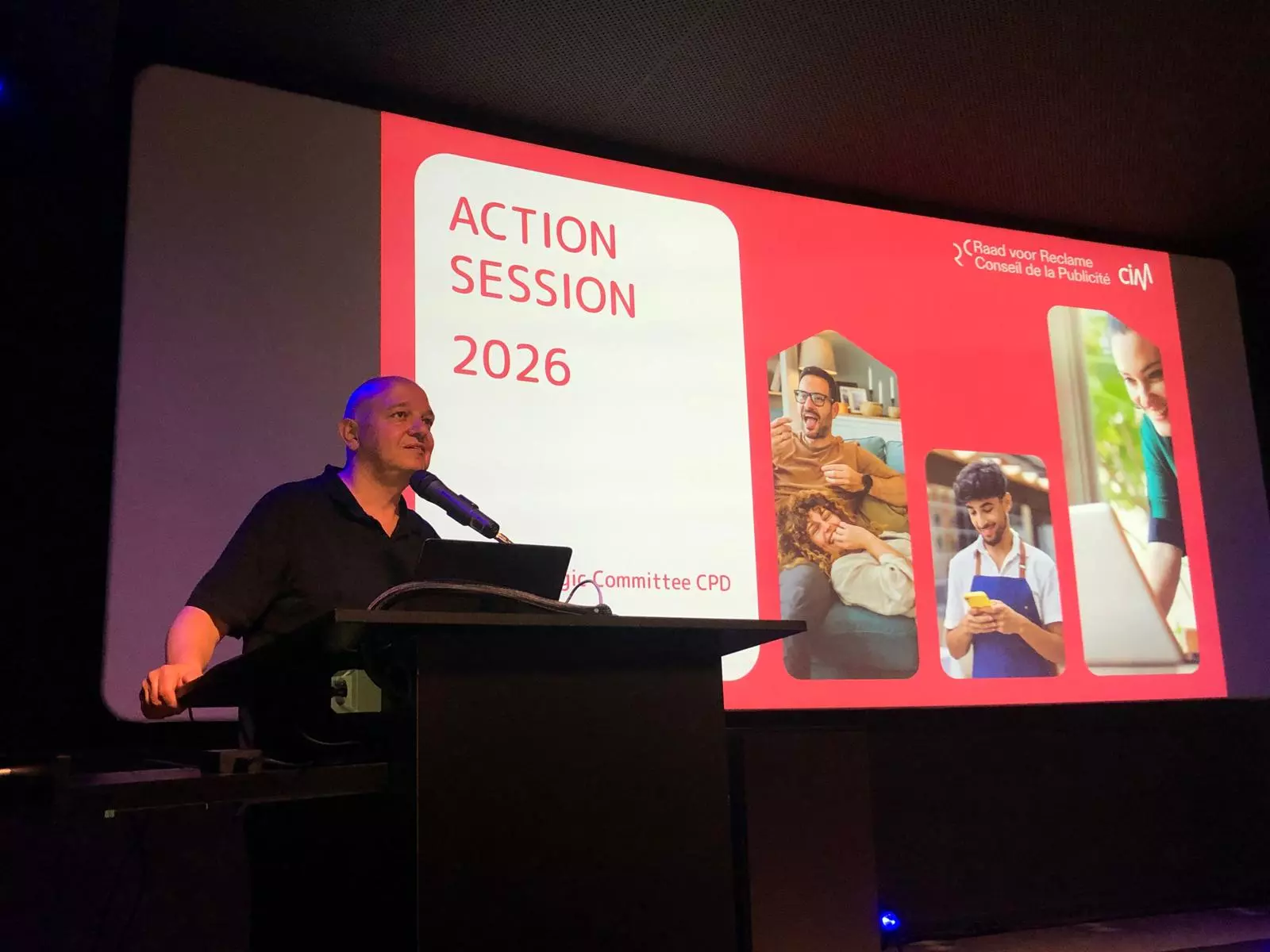
Once again, the second edition of the CIM Action Session has brought a number of notable…